
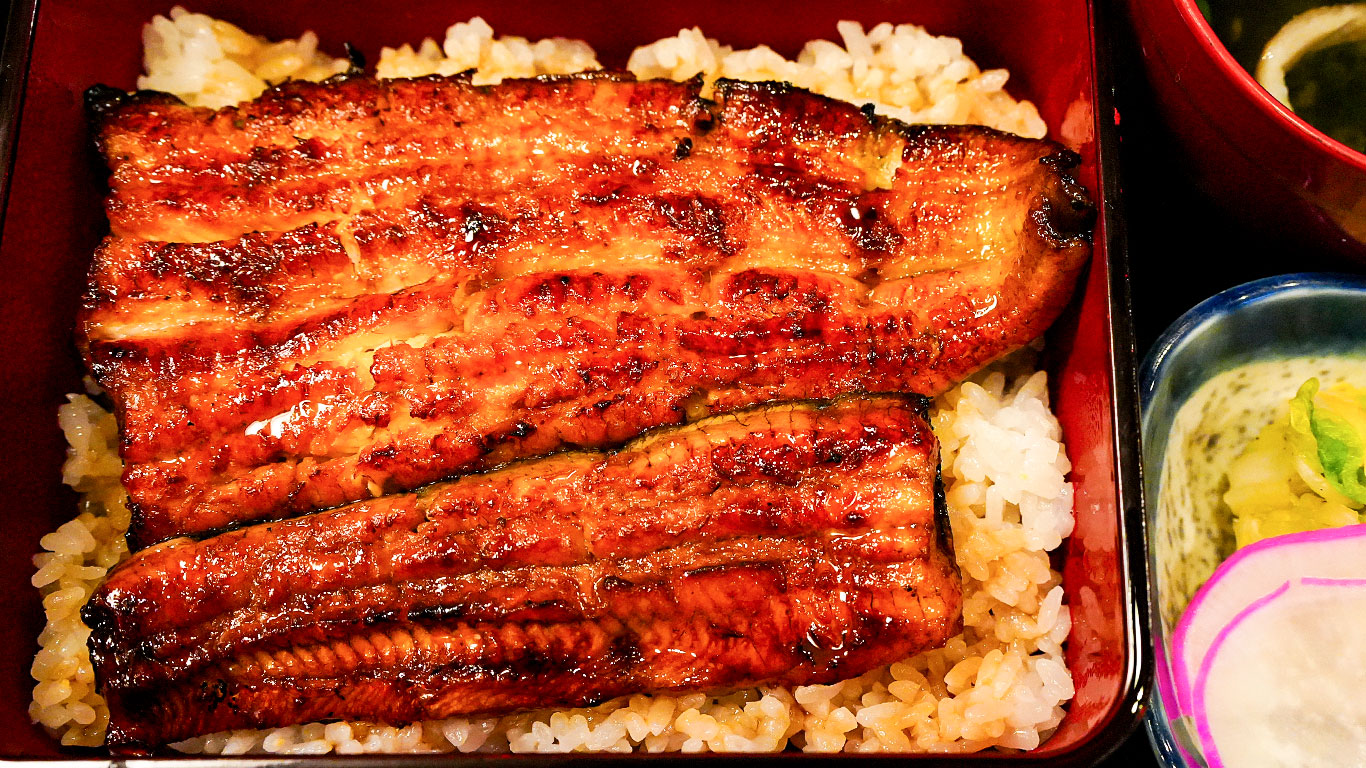
In Ginza, a box of unagi (grilled freshwater eel) can easily cost ¥5,000 or more. On Renga-dori, though, Nobori-tei Ginza serves proper Kanto-style grilled eel for ¥2,600 as unadon and from ¥3,750 as unaju. Its roots go back to an eel wholesaler founded in 1837, and it is one of my everyday favorites. Here is how I enjoy it, with a small bottle of warm sake.
table of contents
Wholesaler-Backed Eel at a Fair Price in the Heart of Ginza
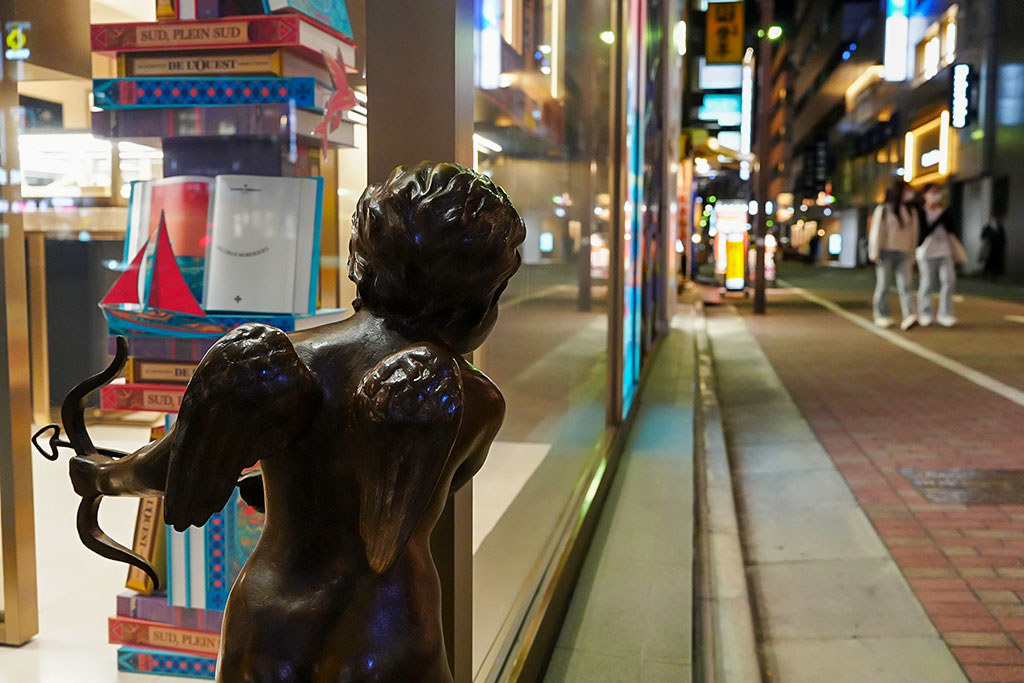
Mention unagi in Ginza, and most locals instinctively check their wallets. At the well-known eel restaurants here, a single serving of unaju often costs ¥5,000 to ¥6,000. Add a few drinks, and a ¥10,000 note disappears in no time.
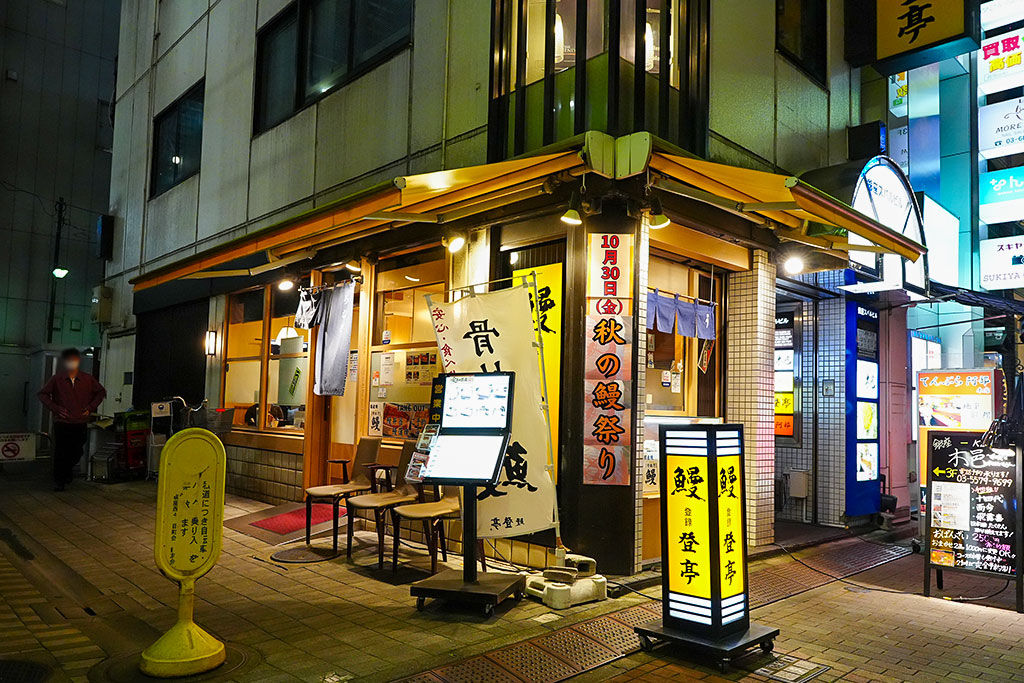
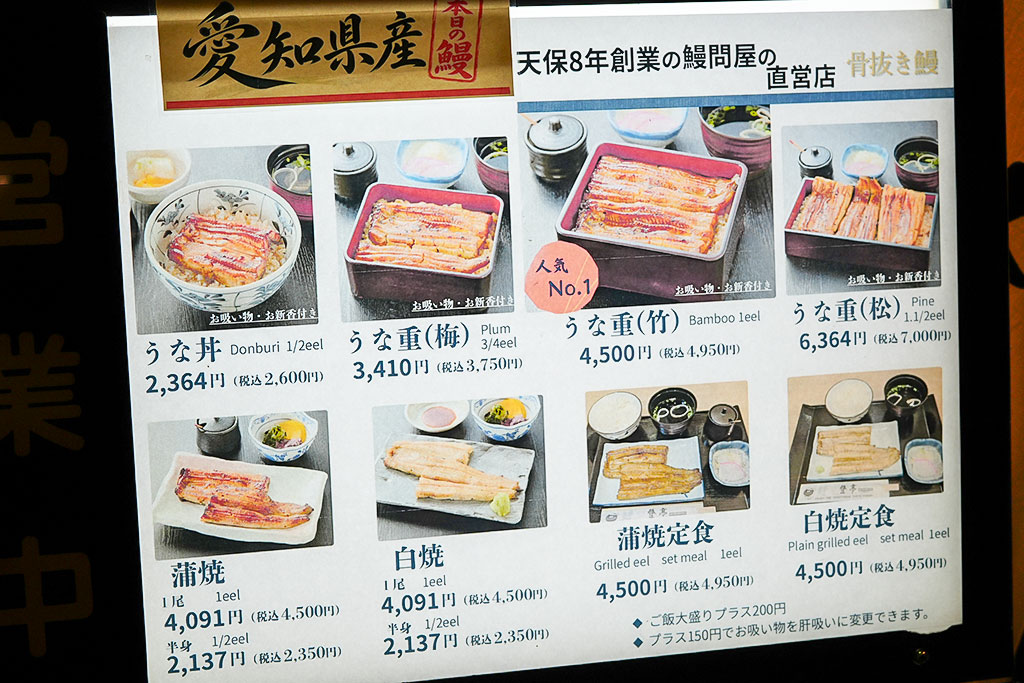
That is why Nobori-tei Ginza stands out, with unaju at ¥3,750 and unadon at ¥2,600.
The shop sits on Ginza Renga-dori (“Brick Street”), whose name traces back to the brick townscape built in the Meiji era. The Ginza branch opened in 2005, and for about 20 years it has been feeding the people who work and shop in this neighborhood.
Nobori-tei began with Nakaichi, a river-fish wholesaler founded in Senju in 1837. In 1952, after the war, the family opened the first Nobori-tei in Nihonbashi-Muromachi, hoping to bring delicious, affordable eel to ordinary people. Back then, its unadon sold for just ¥100 and became a hit.
In those days, many eel shops only started preparing the eel after an order came in, and a wait of nearly an hour was not unusual. Nobori-tei is said to have popularized a faster style: the eel is steamed in advance, then grilled and served quickly. Opinions on this differ, but at a busy central Tokyo shop with a fast turnover, it does not bother me at all.
Nobori-tei also has branches in Shinjuku and Ueno-Hirokoji, and I have known it since I was a child. The shop uses large eels chosen with a wholesaler’s eye and serves “boneless eel,” with the small bones removed one by one. It sticks to Japanese-raised eel. For a while most of it came from Kagoshima; on the day I visited, it was from Aichi.
Warm Suishin Sake, Crispy Eel Bones, and a Fluffy Unaju
The frontage is narrow, and takeout customers keep coming to the counter near the entrance. Walk further in and you will find tables where you can sit down and take your time over a drink.
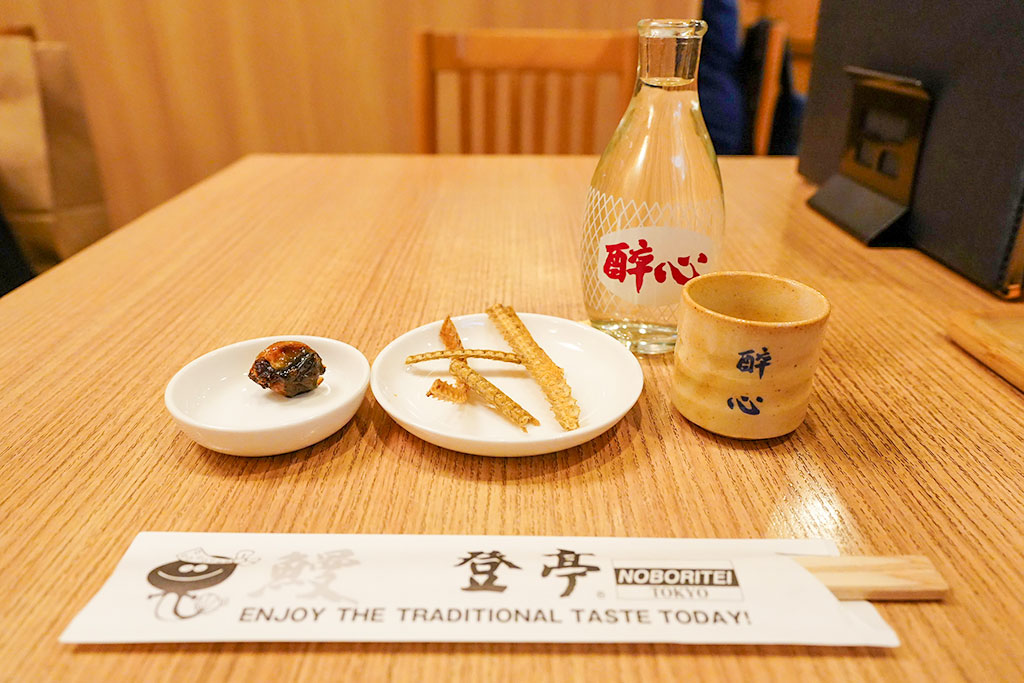
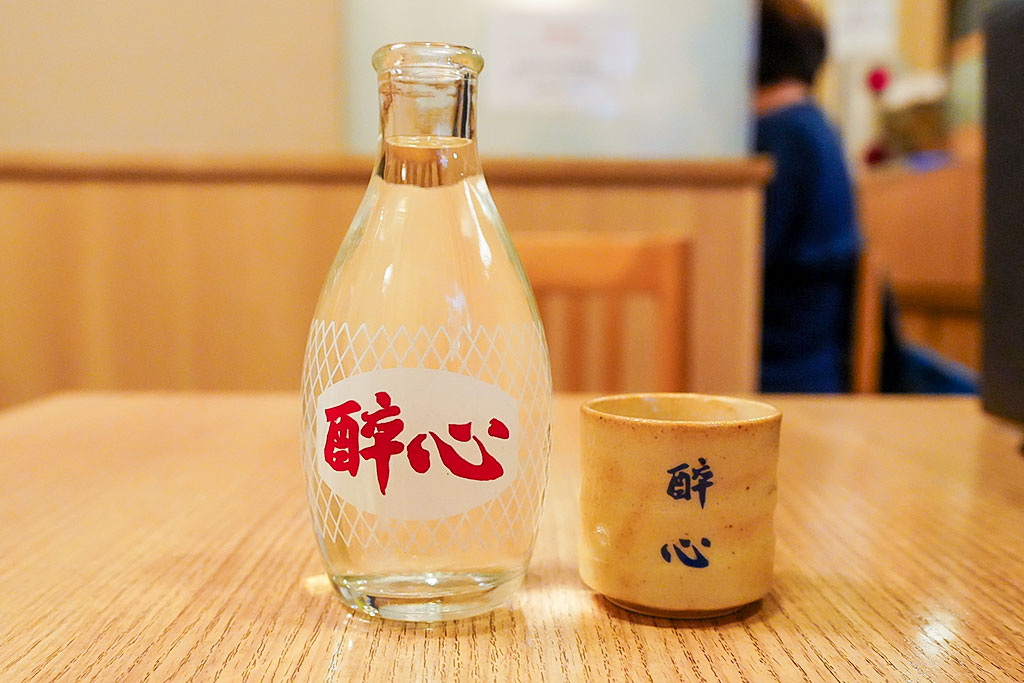
I started with Suishin, a local sake from Mihara in Hiroshima, served warm (okan). It came in a one-go bottle with a matching cup, and I raised a quiet toast on my own.
Suishin is known as the sake loved by the Japanese painter Yokoyama Taikan. Its gentle, smooth taste goes beautifully with the sweet eel sauce.
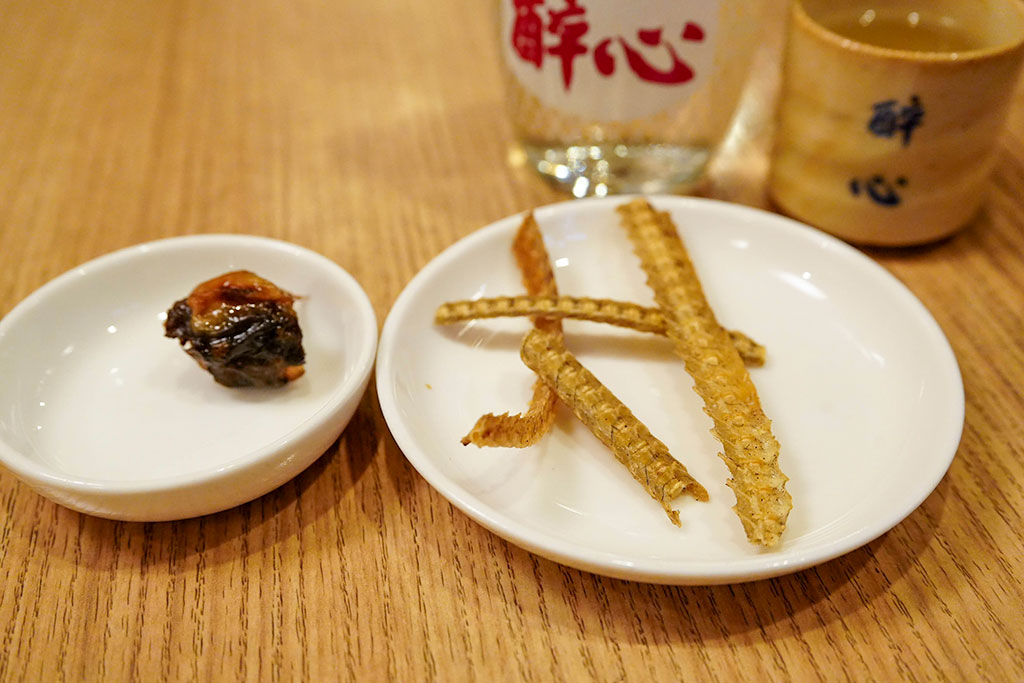
When you order alcohol, the shop brings complimentary fried eel bones (hone senbei) and grilled eel heads (kabuto). The bones are crisp and savory, while the sauce-glazed heads are pleasantly bitter. Both are perfect snacks for sipping warm sake slowly.
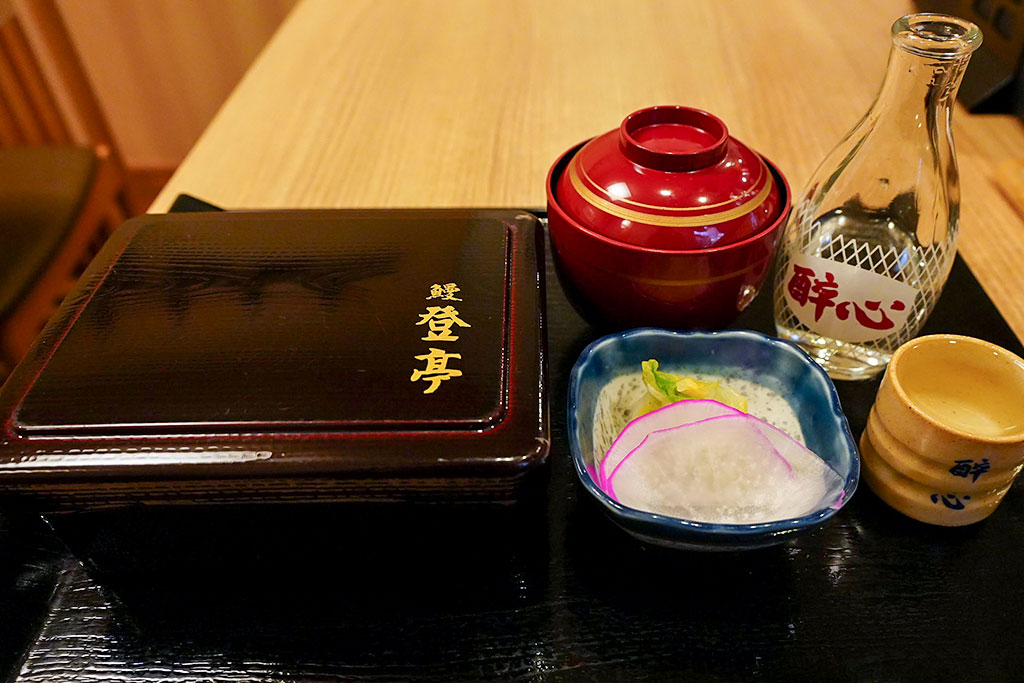
Just as I was settling in, the lacquered box arrived. Because the eel is steamed in advance, it comes out fast. Given the location, many customers buy eel to take home as a gift, and with that turnover the grilled eel never has time to dry out.
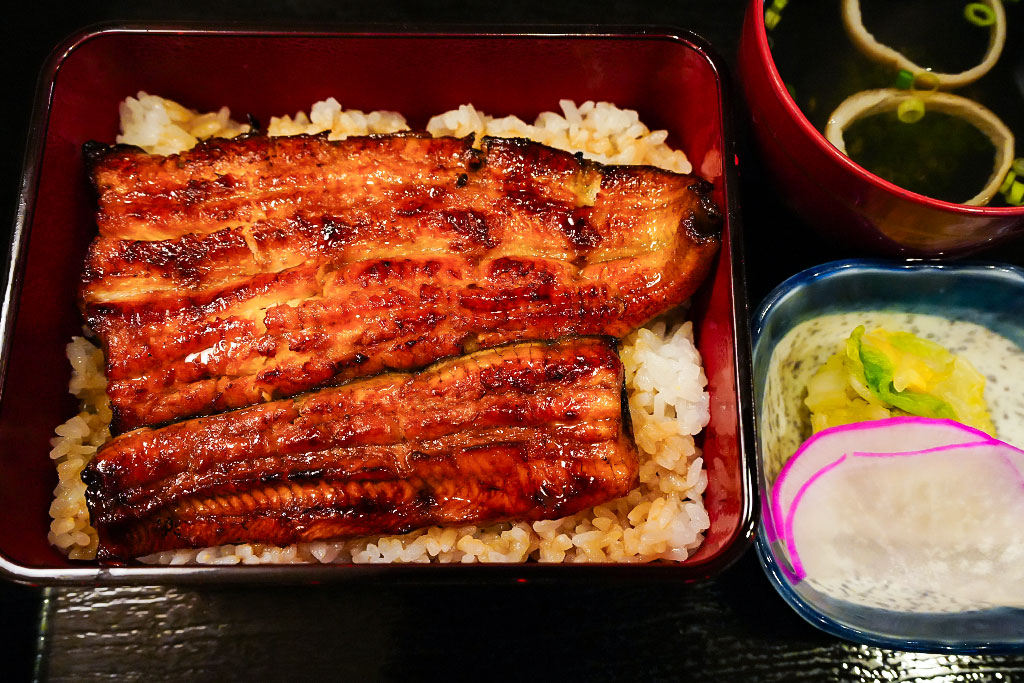
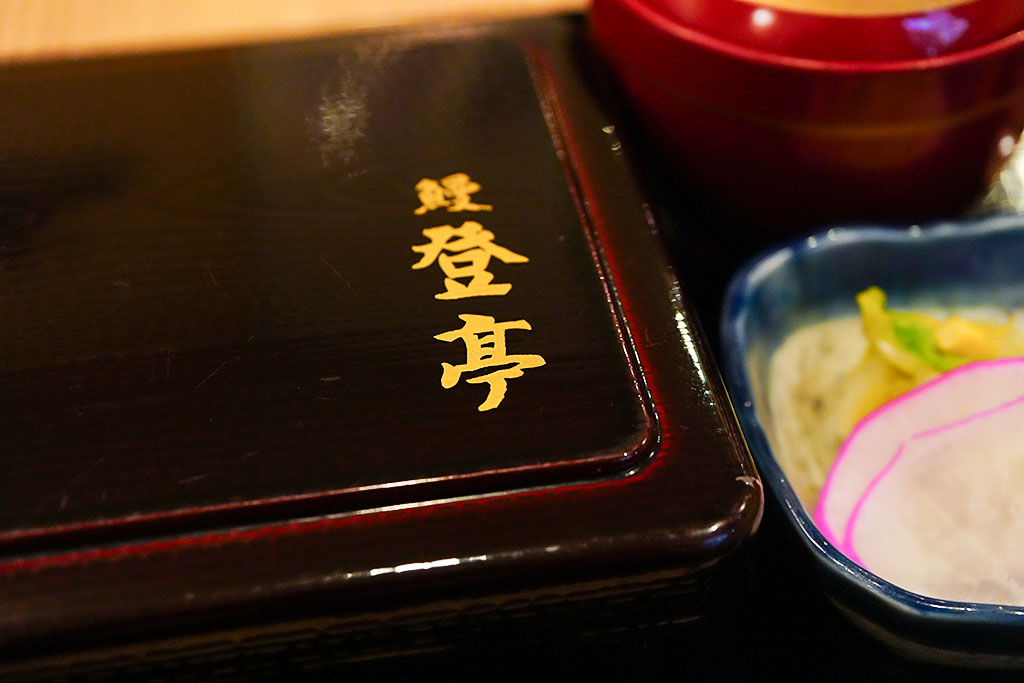
Lift the lid, stamped in gold with the shop’s name, and glossy kabayaki (sauce-grilled eel) covers the rice. Nobori-tei’s eel is thick and fluffy. It is moist and juicy when your chopsticks go in, and the flesh falls apart softly.
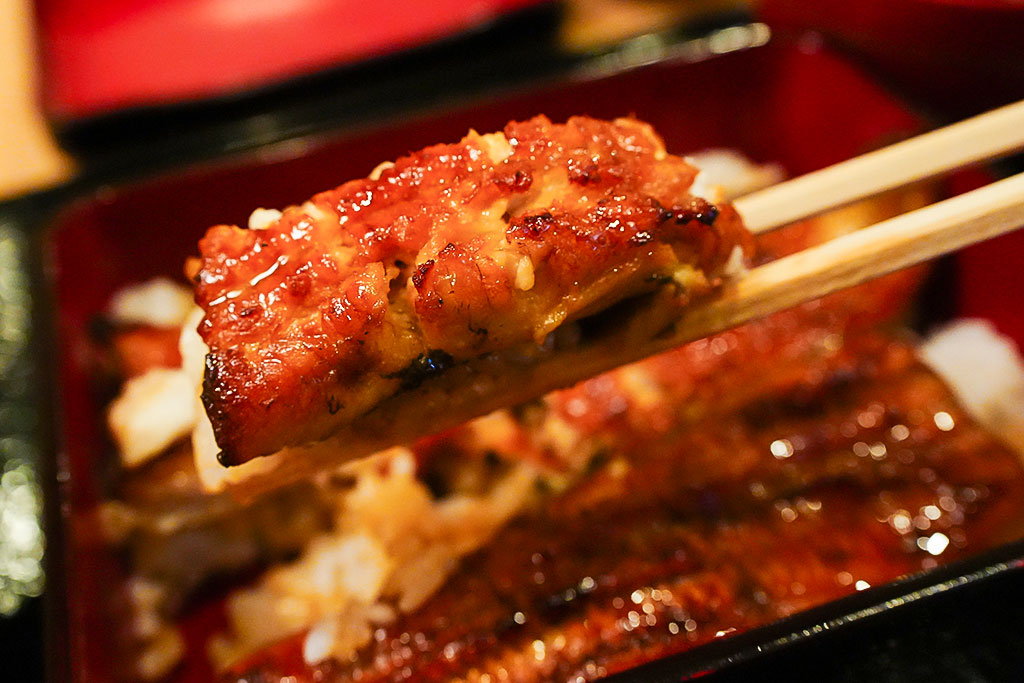
Just enough fat is left on, with no muddy taste, and the balance with the sweet sauce is the classic flavor everyone loves. The rice is cooked on the firm side and soaks up the eel’s fat and sauce. Even the rice works as a snack with sake: one bite of eel, one sip of warm sake, and the bottle empties faster than you expect.
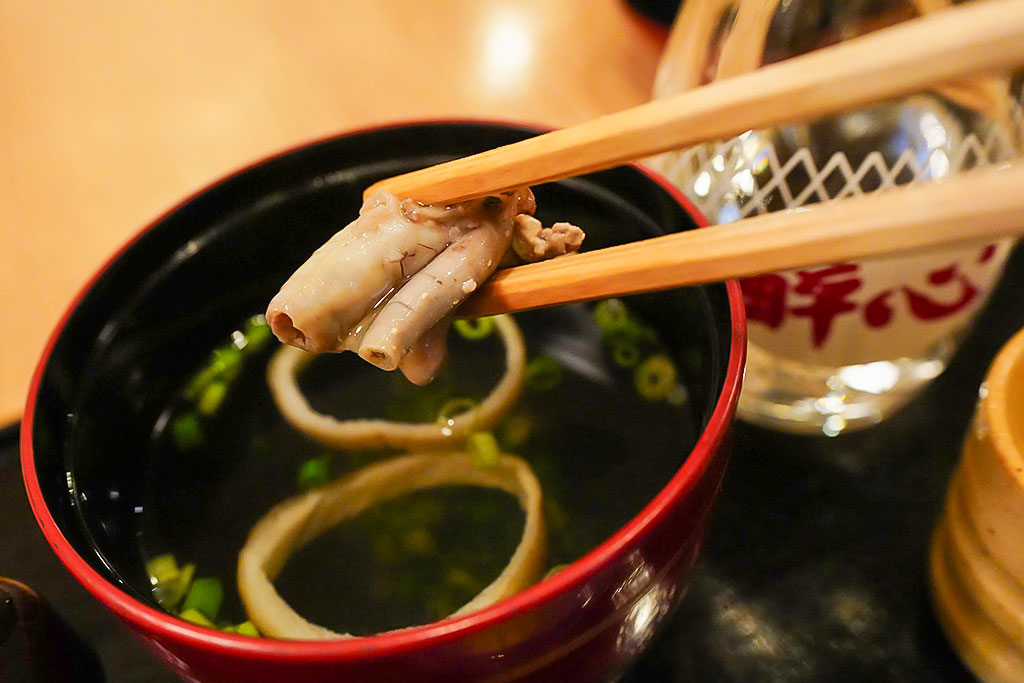
For an extra ¥150, you can swap the regular soup for kimosui, a clear soup with eel liver. Its gentle bitterness is a nice break from the sweet sauce.
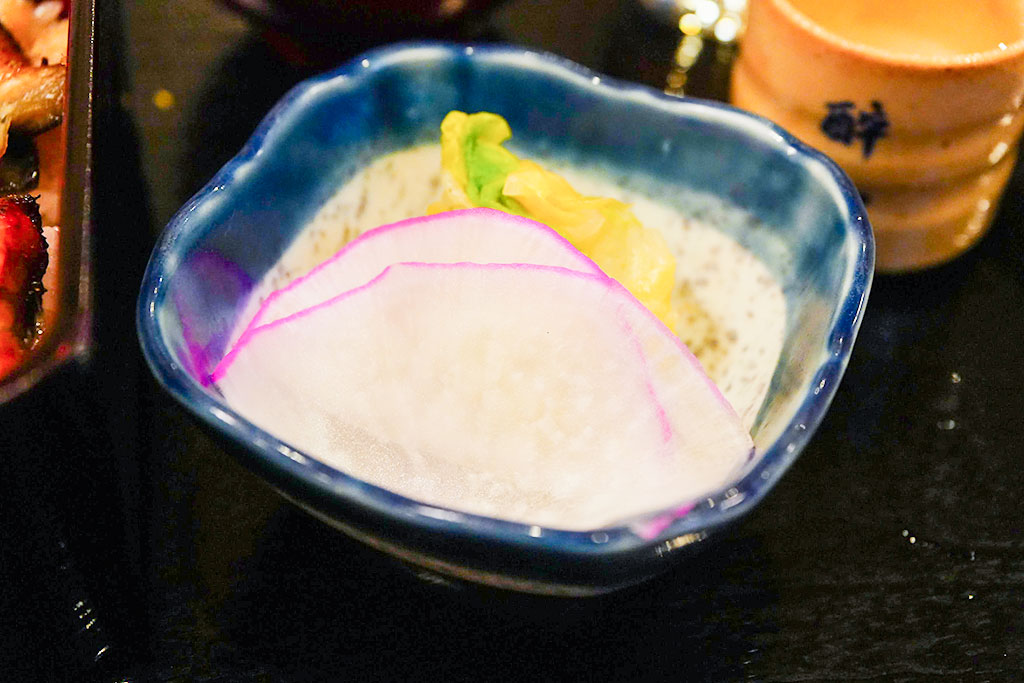
Pickled daikon radish and napa cabbage refresh your palate, and I finished every last bite without getting tired of it.
A Drink and Some Eel While Strolling Ginza
The shop is open from 11:00 to 21:00 without a break, every day of the week. Many Japanese restaurants close between lunch and dinner, so if you avoid the lunch rush, this is an easy place for an afternoon drink.
For something lighter, go for the unadon at ¥2,600. If you are hungry, the most popular choice is the unaju Take grade at ¥4,950. There are plenty of regulars, and retired locals who know how to enjoy an afternoon drink give the room a relaxed, pleasant atmosphere.
Quick Guide for First-Timers
- Unadon vs. unaju: Both are grilled eel over rice. Unadon comes in a bowl, while unaju is served in a lacquered box (jubako).
- Kanto style: In the Tokyo area, eel is steamed before it is grilled, which gives it a soft, fluffy texture. In the Kansai region, it is usually grilled without steaming.
- Ume / Take: These are grade names. At Nobori-tei Ginza, unaju Ume is ¥3,750 and the most popular Take is ¥4,950.
- Okan: Warm sake. Ask for Suishin “okan” if you want it the way I had it.
- Easy for visitors: An English menu is available, credit cards are accepted, and the shop is a 2-minute walk from Ginza Station.
- No mid-day break: Open 11:00 to 21:00 every day, so it is easy to drop in at odd hours while sightseeing.
Shop Information
| Name | Nobori-tei Ginza (登亭 銀座店) |
|---|---|
| Address | 1F Ginza Subaru Building, 4-3-7 Ginza, Chuo-ku, Tokyo (東京都中央区銀座4-3-7 銀座スバルビル1F) |
| Access | 2-minute walk from Ginza Station |
| Hours | 11:00–21:00 |
| Closed | Open daily |
| Payment | Credit cards accepted |
| English menu | Available |
| Founded | 1837 (as an eel wholesaler); Ginza branch opened in 2005 |
Prices are as of my visit in October 2026.